
Packaging choice shapes everything downstream: handling equipment, storage, dosing into production, and the economics of each container. The right answer depends on what happens to the honey after arrival.
Food-grade steel barrels
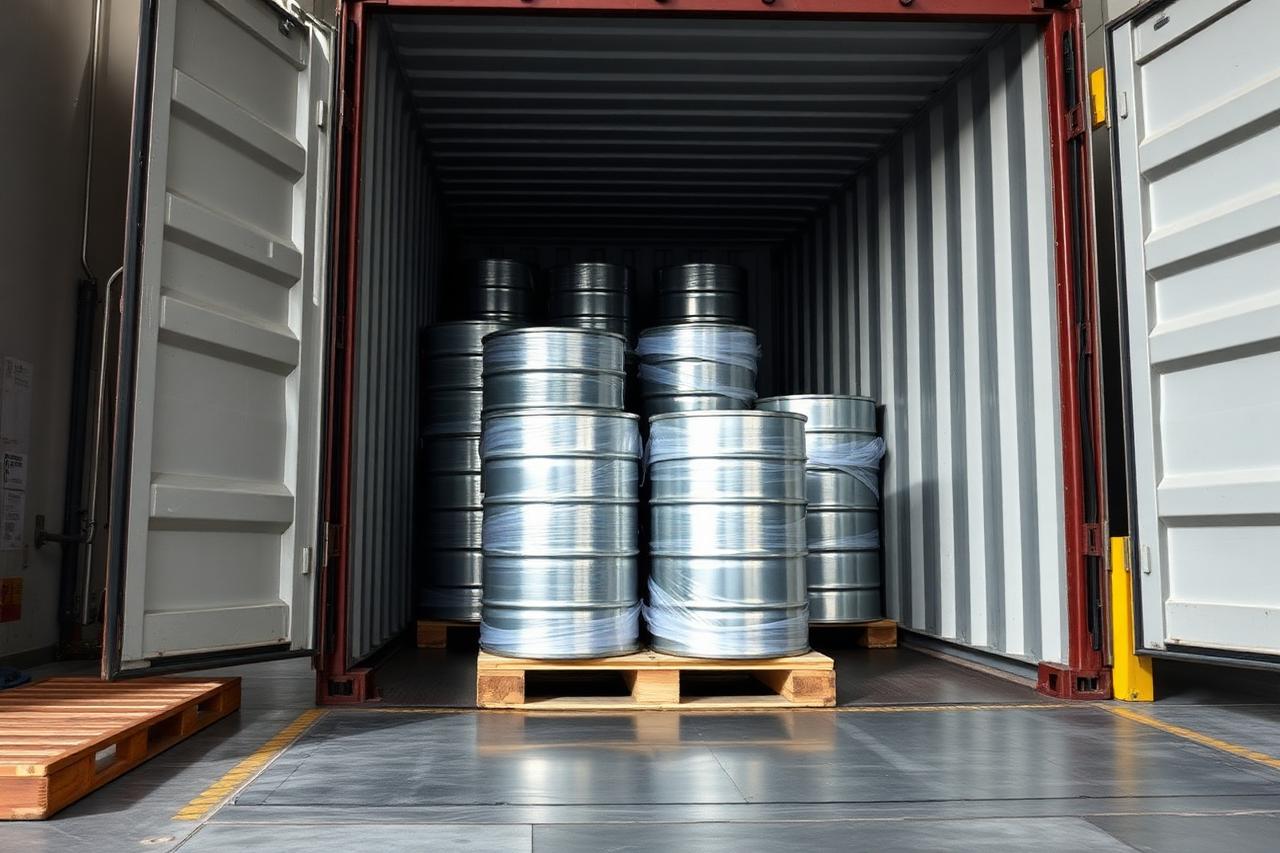
Food-grade mild steel barrels with epoxy-coated interiors remain the default for bulk honey trade — robust, stackable, and familiar to every warehouse. They suit processors who melt, blend or repack, and their standardised dimensions make container planning straightforward.
IBCs and bulk formats
Intermediate bulk containers suit manufacturers with pumping infrastructure who value fewer packages per shipment and faster discharging. The trade-offs are handling equipment requirements and return-or-recycle logistics, which should be agreed commercially.
Buckets and retail formats
Foodservice buckets and retail jars or bottles move the packing complexity to the supplier — filling accuracy, seal integrity, labelling and case configuration. For private-label programs, packaging development becomes part of the supply agreement itself.
Palletisation and container planning
Whatever the format, the loading plan matters: pallet patterns, weight distribution and stuffing supervision protect the cargo and simplify discharge. Ask your supplier to share the proposed loading plan with the quotation — it is a good indicator of operational maturity.